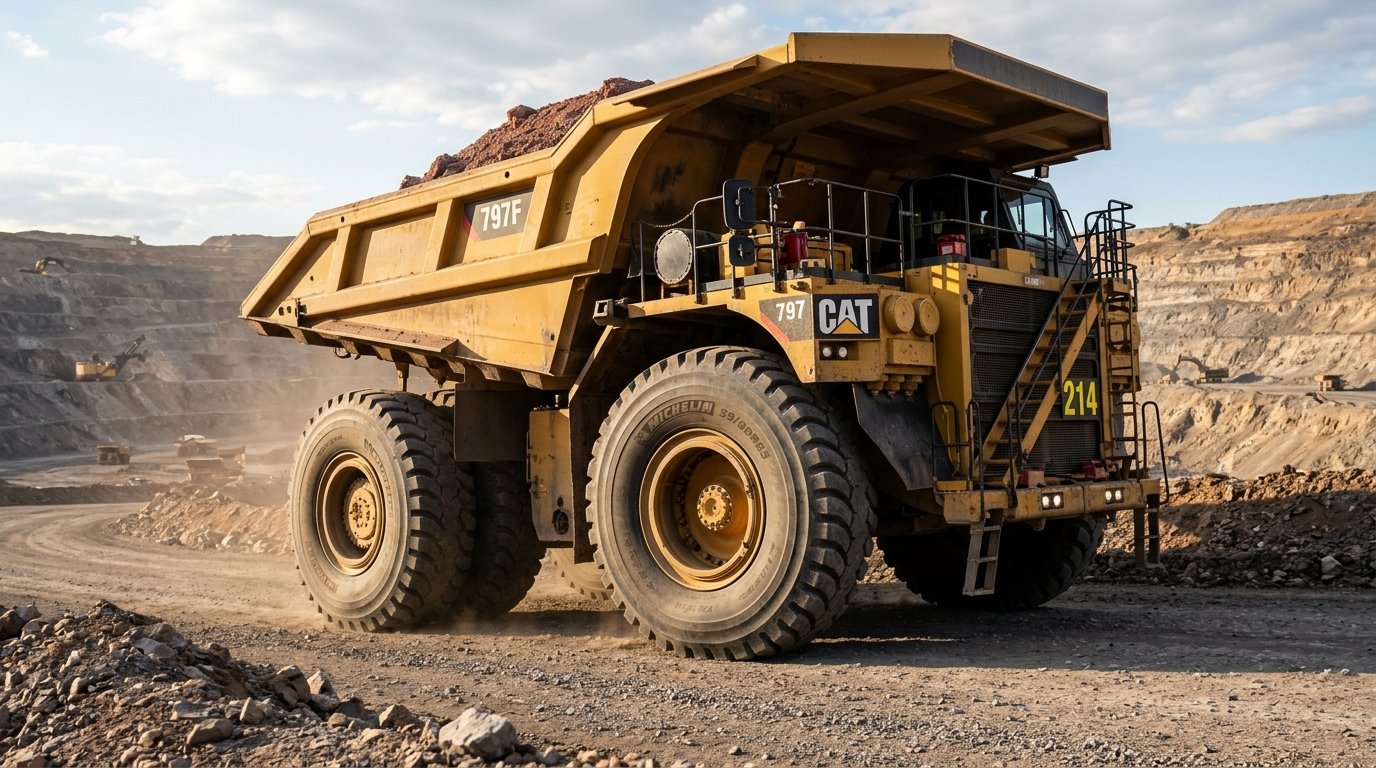
Bring industrial sensing, edge intelligence, and connected monitoring to mining equipment and infrastructure. IGNISFORMA helps equipment manufacturers and mine operators develop solutions that improve asset visibility, identify abnormal operating conditions, and support maintenance decisions.
Mining equipment operates under heavy loads, persistent vibration, dust, moisture, and changing environmental conditions. Across conveyors, crushers, pumps, ventilation systems, and mobile machinery, early signs of deterioration can be difficult to identify through periodic inspections alone.
IGNISFORMA combines sensorization, embedded processing, and industrial connectivity to capture these signals and make equipment condition visible—from individual assets to distributed monitoring systems.
Keep a closer watch on critical material movement.
Monitor conveyor drives, pulley bearings, gearboxes, and transfer equipment using vibration, acoustic, temperature, and operating-status data.
Understand machine behavior under demanding loads.
Capture vibration, temperature, and motor-load data from crushing, screening, and grinding equipment. Compare behavior across similar operating conditions to identify changes requiring investigation.
Improve visibility into essential fluid-handling equipment.
Combine equipment condition sensing with pressure, flow, and electrical measurements to monitor pumps and associated systems.
Monitor the machines behind underground airflow.
Track ventilation fan motors, bearings, and drives while integrating airflow and pressure measurements for a broader view of system performance.
Bring machine and operating data together.
Integrate onboard sensing with available vehicle and subsystem data to monitor haul trucks, loaders, excavators, and support equipment.
Extend visibility to distributed assets.
Develop monitoring nodes for equipment and infrastructure located away from regularly attended areas.
Process measurements close to the equipment to extract useful features, identify abnormal patterns, and retain relevant operating data.
Local processing can reduce continuous raw-data transmission and support monitoring in locations with intermittent backhaul connectivity.
Capture signals from sensors, equipment interfaces, and connected instruments under heavy operating loads.
Compare operating behavior against application-specific baselines to detect developing anomalies early.
Share alerts, trends, and selected diagnostic data when connectivity is available or over local field links.
Thresholds and models are validated against actual operating conditions, including equipment speed, loading, mounting location, and background vibration.
Combine wired and wireless interfaces according to distance, terrain, infrastructure, power availability, and installation constraints.
| Connectivity Approach | Typical Application in Mining |
|---|---|
| RS485 / Modbus | Connecting field instruments, drives, and distributed fixed equipment. |
| CAN / J1939 | Integrating mobile equipment, haul truck telemetry, and onboard subsystem data. |
| Industrial Ethernet | Connecting local gateways, process plant controllers, and substation networks. |
| LoRa-Based Links | Sending low-data-rate measurements where a site survey confirms RF coverage. |
| Cellular Connectivity | Connecting surface assets and mobile fleets where private or public network service is available. |
| Local Wireless Access | Fast field commissioning and nearby maintenance access using handheld devices. |
Underground communication architecture is developed around site coverage and available infrastructure. Radio equipment is subject to regional type approvals (e.g. WPC ETA in India in the 865–867 MHz band; cellular gateway MTCTE/TEC where applicable).
Sensor performance depends on more than the electronics. Mounting, enclosure construction, cable protection, power quality, and service access all influence measurement reliability.
Direct mechanical coupling to bearing housings and structural load paths.
Sealed against heavy dust, high-pressure washdowns, moisture, shock, and extreme temperatures.
Protected power inputs and electrical interface isolation designed for ISO 16750-2 load-dump compliance.
Optimized low-power modes and intelligent sleep states for remote battery installations.
Straightforward installation and modular replacement without interfering with routine machine maintenance.
Start with a defined equipment problem, establish a reliable measurement baseline, and validate the solution under real operating conditions.
| Engineering Area | Scope & Deliverables |
|---|---|
| Application Assessment | Asset selection, monitoring objectives, installation constraints, and acceptance criteria. |
| Sensor & Electronics Integration | Sensor nodes, instrument interfaces, power systems, and edge gateways. |
| Embedded Intelligence | Data acquisition, signal processing, diagnostics, and application-specific inference. |
| System Integration | Connectivity to supervisory systems, SCADA/fleet dashboards, and maintenance workflows. |
| Field Validation | Signal quality, operating baselines, alert usefulness, and communication reliability. |
| Deployment Support | Installation documentation, manufacturing preparation, and service planning. |
Continuous equipment condition and distributed fixed asset monitoring.
Crusher, vibrating screen, grinding mill, and heavy drive-system monitoring.
Overland conveyors, transfer stations, ship loaders, and stacking equipment.
Dewatering pumps, tailings pipelines, sumps, and storage tank systems.
Main fan condition and seamless integration with airflow instrumentation.
Onboard sensing, J1939 subsystem data, and operating-condition monitoring.
Whether you need to monitor a critical conveyor drive, instrument a remote pumping station, or develop an embedded sensing platform for mining equipment, IGNISFORMA can help define and engineer the solution.